Thinking
It's All About Recalibration When Your On 20's
Most people treat their 20s like a race. The people who thrive treat it like an experiment.

Rigid life plans fail in unpredictable worlds. Direction systems allow progress without needing certainty.
One of the biggest anxieties young adults experience comes from a single question:
“What am I supposed to do with my life?”
The question sounds reasonable, but it hides a flawed assumption — that life requires a fixed plan.
Plans work best in stable environments. Modern life is not stable.
Industries evolve, technology reshapes careers, and opportunities appear unexpectedly. A rigid life plan often becomes outdated faster than it can be completed.
What works better is a direction system.
Plans assume predictability.
You choose a destination, outline steps, and execute sequentially. But reality introduces variables you cannot foresee:
new interests,
economic shifts,
unexpected opportunities,
personal growth.
When reality diverges from the plan, people feel lost — even when they are actually progressing.
The issue isn’t failure. The issue is rigidity.
A direction system focuses on movement rather than outcomes.
Instead of asking:
“Where will I be in 10 years?”
Ask:
What skills am I moving toward?
What environments help me grow?
What kind of problems do I enjoy solving?
Direction creates flexibility while maintaining momentum.
You don’t need certainty to move forward — only orientation.
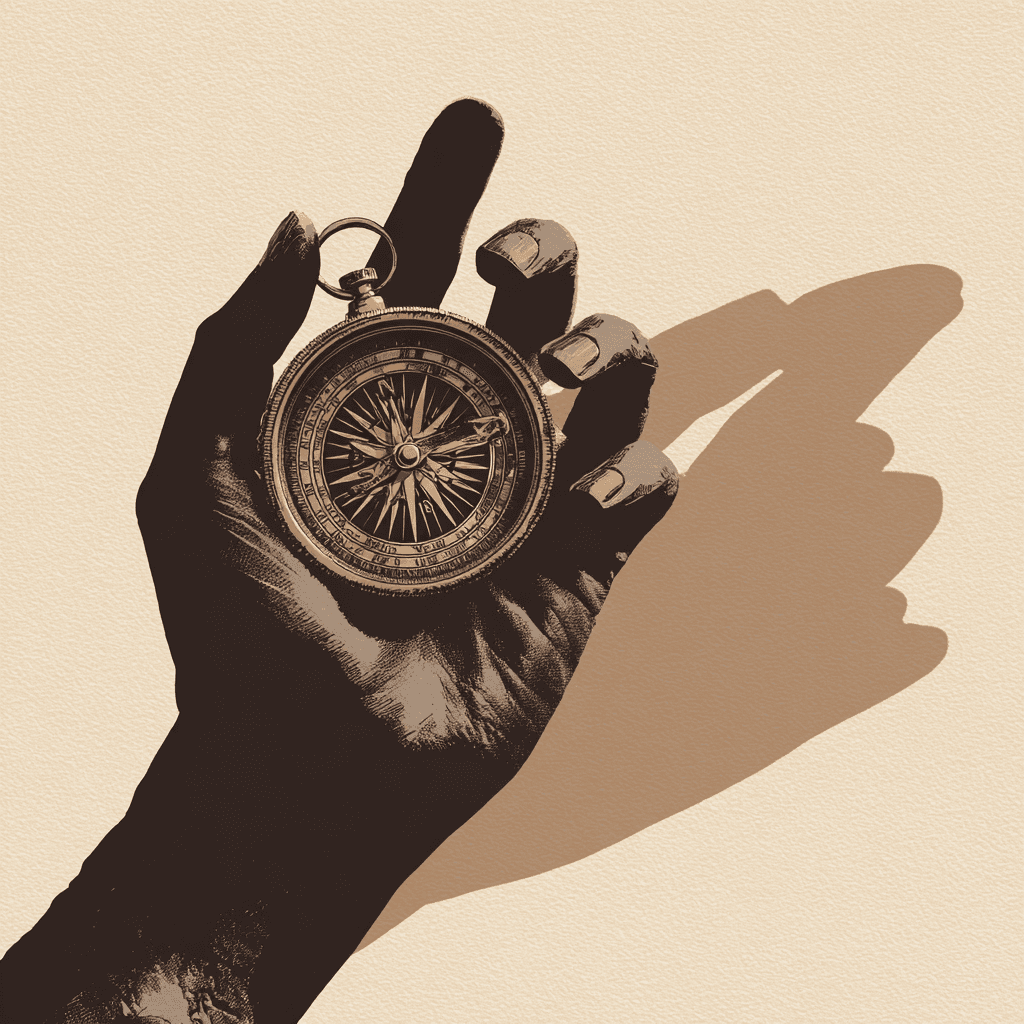
A practical direction system uses three internal compasses:
1. Curiosity Compass
What consistently interests you over time?
Curiosity signals sustainable engagement.
2. Energy Compass
Which activities leave you mentally energized rather than drained?
Energy reveals alignment.
3. Growth Compass
Where do challenges feel meaningful instead of pointless?
Growth indicates long-term potential.
When all three align, direction becomes clear even without a defined endpoint.
People often delay action while waiting for clarity.
Ironically, clarity emerges from movement, not thinking.
Small experiments reduce uncertainty:
short projects,
new collaborations,
skill exploration.
Each action produces feedback that refines direction.
A direction system removes pressure to “figure everything out.”
Instead, life becomes iterative.
You adjust course gradually, maintaining forward motion while allowing identity to evolve naturally.
Success stops being a fixed destination.
It becomes alignment over time.
Thinking
Most people treat their 20s like a race. The people who thrive treat it like an experiment.

Thinking
Your habits are no longer shaped only by choice. They’re shaped by systems competing for your attention every second.

Insights
Growth isn’t determined by intelligence or opportunity alone. It’s determined by how people respond to discomfort.