Wellness
You’re Not Lazy — You’re Mentally Overloaded
Many people mistake exhaustion for laziness. The real issue might be cognitive overload caused by modern lifestyles.
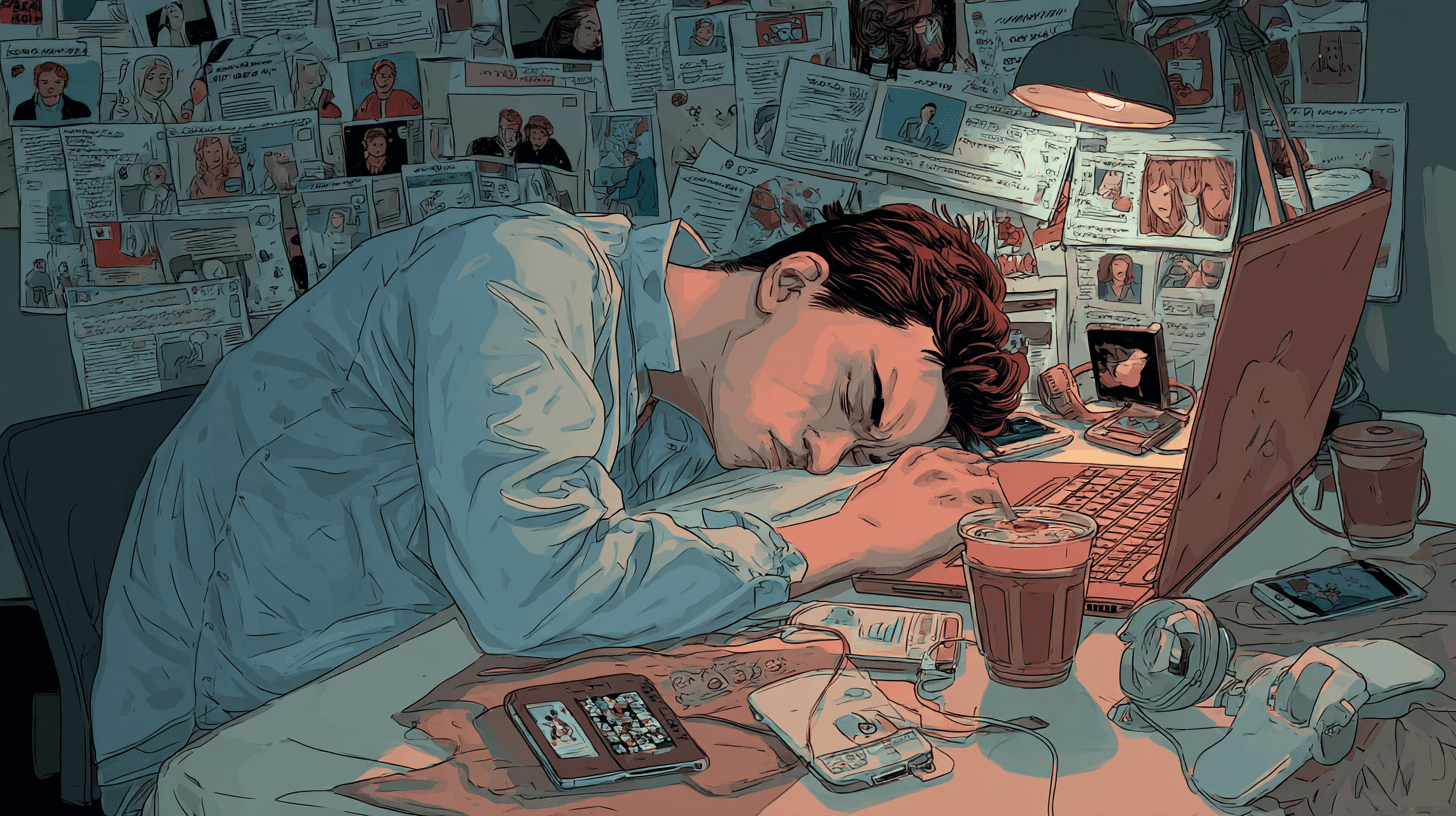
We often blame ourselves for losing focus, but modern technology is engineered to capture attention. Understanding how it works is the first step toward reclaiming control.
There’s a quiet frustration many people experience today: sitting down to do something important and realizing their attention disappears within minutes.
You open your laptop to work, then check one notification. That notification leads to another app. Suddenly forty minutes are gone, and you barely remember what you were supposed to do.
Most people interpret this as a personal failure — lack of discipline, weak motivation, or poor time management. But the reality is far more complex. Modern digital environments are intentionally designed to hold your attention for as long as possible.
Your brain, meanwhile, evolved for a completely different world.
Technology companies compete for engagement because attention translates directly into revenue. Every feature — infinite scrolling, autoplay videos, algorithmic feeds — exists to reduce the chance that you stop consuming.
These systems work because they tap into fundamental psychological mechanisms. Humans are naturally curious about novelty. Each swipe offers uncertainty: maybe something interesting appears next. That unpredictability creates a reward loop similar to slot machines.
Over time, your brain begins expecting constant stimulation.
When stimulation becomes normal, silence feels uncomfortable. Tasks that require patience — studying, writing, learning a skill — suddenly feel unusually difficult, even though nothing about your ability has changed.
The environment changed first.
Focus requires sustained attention without immediate rewards. But frequent exposure to short bursts of content trains the brain to prefer quick dopamine feedback.
This doesn’t mean technology is harmful by default. It means your brain adapts efficiently to whatever environment it lives in.
If your daily habits prioritize rapid consumption, your cognitive patterns will follow.
Many people try to solve this by forcing strict discipline: deleting every app, creating extreme routines, or blaming themselves when consistency fails. The problem is that willpower alone rarely beats systems designed by teams of behavioral scientists.
Instead of fighting your brain, redesign your environment.
Regaining focus doesn’t require dramatic lifestyle changes. Small structural adjustments often work better because they reduce decision fatigue.
Start by creating intentional friction.
Move distracting apps off your home screen. Disable non-essential notifications. Log out of platforms that trigger automatic usage. These small inconveniences interrupt unconscious behavior and return control to conscious choice.
Next, introduce focused time blocks.
Even twenty uninterrupted minutes of deep work daily begins retraining attention. The goal isn’t productivity perfection — it’s rebuilding tolerance for sustained thinking.
You may notice discomfort at first. That discomfort is not failure; it’s adaptation.
One mistake people make is trying to eliminate scrolling without replacing it. Empty habits rarely stay empty.
Instead, substitute passive consumption with intentional input:
long-form articles
podcasts during walks
educational videos watched deliberately rather than algorithmically
The brain still receives stimulation, but in a structured way that strengthens rather than fragments attention.
Over time, the difference becomes noticeable. You think more clearly. Tasks feel less overwhelming. Ideas connect more easily.
The purpose isn’t to reject technology or become hyper-productive. It’s to regain agency.
Attention shapes identity. What you consistently focus on becomes what you learn, believe, and eventually create.
When attention is outsourced entirely to algorithms, growth becomes accidental. When attention is directed intentionally, growth becomes predictable.
You don’t need perfect habits. You only need slightly better control today than yesterday.
Focus isn’t lost forever. It’s simply waiting for an environment that allows it to return.